Why Universities Are About To Regret Their Massive Grade-Inflation Policies
Universities across the US are engaging in a massive, grade-inflating Ponzi scheme which will destroy the value of a University degree in a matter of years.
I have recently reflected on why I don’t feel an immense amount of satisfaction when I receive an ‘A’ in my college classes, and the truth is that obtaining an ‘A’ at an American University is far too easy in today’s undergraduate culture.
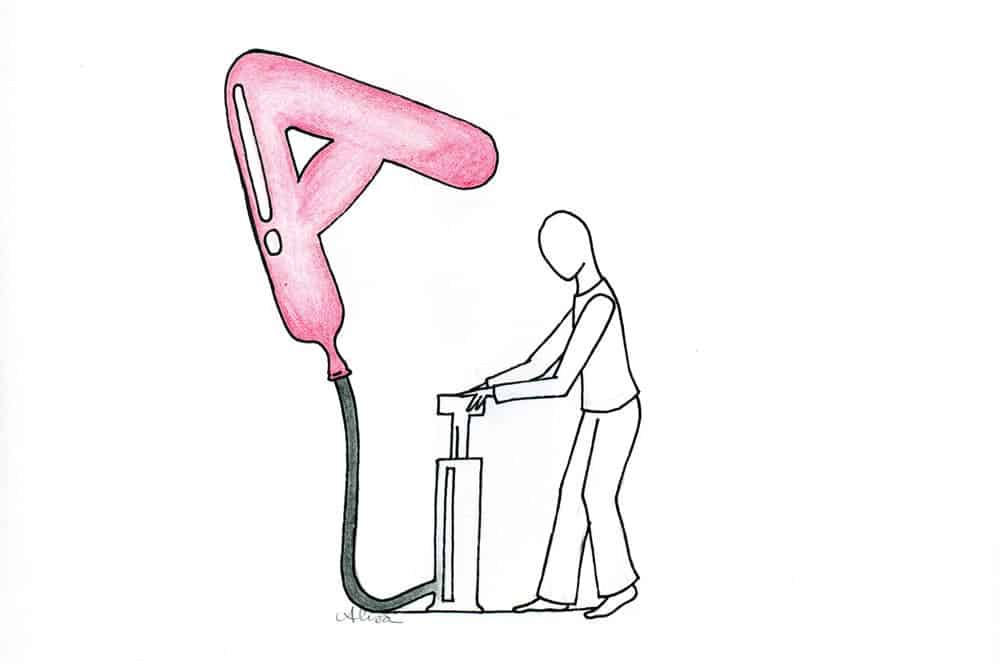
The problem is not the fault of the students, but instead has been propagated by a financially-driven University system which is poorly incentivized, prizing short term income and prestige over long term value-generation and integrity. Let me posit the argument I am making:
- • Due to the immense financial burden of obtaining a University degree in the USA, students are performing a cost-benefit analysis and are only attending University on the assumption that their degree will help them find a top-paying job that more than makes up for the cost of attending.
- • Given this high level of expectation, Universities are forced to engage in grade-inflation in order to ensure that their students achieve the high grades necessary to obtain a top-paying job, or face difficulties in attracting prospective students for future years.
- • As grade inflation becomes the norm, employers struggle to distinguish applicants based on their GPA, and instead look for alternative ways to instantaneously filter out the weakest candidates.
- • With a GPA no longer contributing to a student’s employment prospects, the value of a University degree is severely reduced, damaging the value of a University education.
Yes, there are a number of caveats to this argument, but in general I think it holds that the rise of exorbitant tuition fees have helped to fuel grade-inflation on a mass level. A piece of news from the Harvard Crimson recently went viral when it was revealed that the most common grade awarded at Harvard is an ‘A’, which the New York Times complemented with a story about how the most common grade nationwide has been an ‘A’ or ‘A-‘ since 1997. I don’t believe that I should be able to sit down and write a 5 page paper, with no revisions, in 3 hours and receive an ‘A’, in subjects as wide-ranging as “the limits of the Capital Asset Pricing Model” to “a critique of Emmanuel Kant’s Deontological moral framework”. By being more lenient in their grading, professors are doing their students a disservice by fostering a culture whereby students are disappointed if they don’t receive an ‘A’, and stopping the best students from producing their finest work by incentivizing them to turn in work that is just “good enough” for an ‘A’.
What can be done to stop the implosion?
There are two roots causes of this problem – the spiraling cost of University tuition in the US, increasing the pressure on professors to reward a high number of ‘A’s, and the inefficacy of a Grade Point Average as a system for measuring a student’s employability. While all Universities continue to inflate grades, no single institution will be able to make a difference by curbing their policies without damaging the prospects of their students and their own reputation. Instead, we need to initiate wide-scale reform that will produce a better measure of a student’s employability, while maintaining the institution’s integrity. Let’s start a conversation, both amongst ourselves and with our University’s administration: what can be done to stop the impending implosion of the value of a University degree? What do you think? Until next time! Ross Garlick Rambler-in-Chief